

SOC 2 Compliance Checklist: A Step-by-Step Guide for Software Teams
A practical SOC 2 compliance checklist: who needs it, scope, controls list, readiness assessment, evidence and audit steps from a team examined under SOC 2.
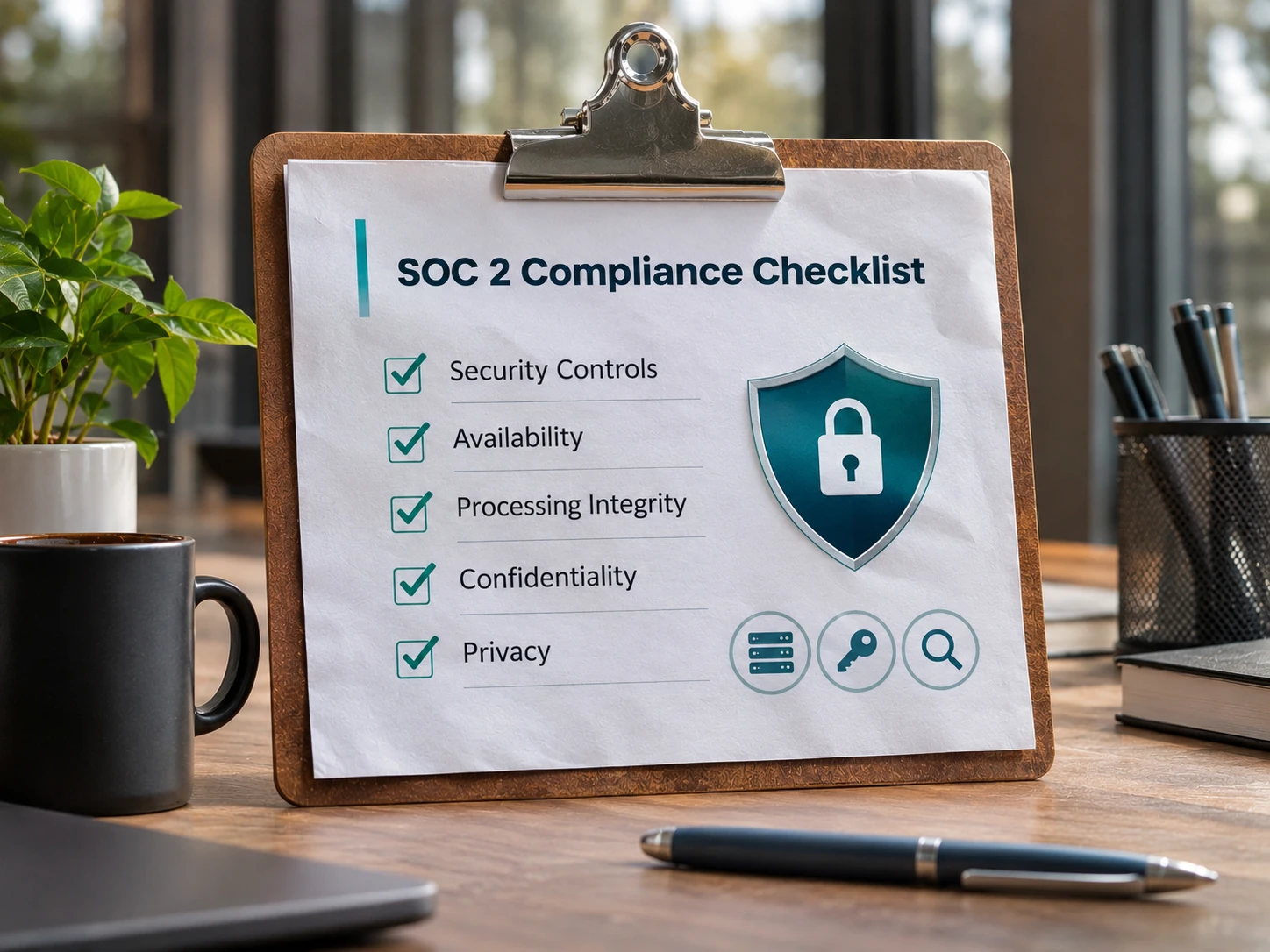
A SOC 2 compliance checklist has nine steps: confirm you need a report, set the scope, run a readiness assessment, close the gaps, write the policies, collect evidence, pick a CPA firm, go through the examination, and plan the renewal. SOC 2 is not a certification you pass once. It is an examination report from an independent CPA firm on how your controls actually work.
Nebustream has been examined under SOC 2 for security, availability, and confidentiality, so this checklist reflects what an engineering team really has to do. It is general guidance, not an audit plan. Your CPA firm decides what the examination requires.
Who Needs SOC 2 Compliance?
No law requires SOC 2. Companies pursue it because customers ask for it. The AICPA's SOC 2 guide notes that customers and business partners often request a SOC 2 report from a service organization to understand its controls.
So the practical answer to who needs SOC 2 compliance is any company that stores, processes or has access to other companies' data, and whose buyers expect proof. That typically means:
- SaaS and software companies selling to mid-market and enterprise customers.
- Cloud, hosting and data providers that sit inside a customer's data flow.
- Vendors to government and health programs whose security reviews mention SOC 2 next to HIPAA or similar rules.
- Growing businesses that want their controls tested before a prospect asks.
If nobody is asking yet, you can still get ahead of it. If you are comparing it with another report, read SOC 1 vs SOC 2. Our SOC 2 compliance page describes the readiness work we do.
What Are the SOC 2 Compliance Requirements?
The SOC 2 compliance requirements come from the AICPA's Trust Services Criteria, published as the 2017 Trust Services Criteria with revised points of focus (2022). There are five categories: security, availability, processing integrity, confidentiality and privacy.
Three rules shape your checklist:
- Security is always in scope. It is the one category required in every SOC 2 report. Availability, confidentiality, processing integrity and privacy are optional (Cloud Security Alliance).
- A CPA firm performs the examination. SOC 2 is an attestation, not a certification, signed by a licensed CPA.
- You define your own controls. The criteria say what outcome a control must achieve. You decide how to meet it and then show that you do.
The AICPA also lists exposure drafts of proposed 2027 revisions to the criteria on its SOC suite page. Ask your CPA firm which version applies to your examination.
The SOC 2 Compliance Checklist, Step by Step
1. Confirm what customers are asking for. Find out which report, which type and which categories your buyers expect. Our guide to SOC 2 Type 1 vs Type 2 helps with the type decision.
2. Set the scope. List the systems, services, data and people that deliver your service. Pick the categories to include. Keep the first scope no larger than your customers need, because every extra category adds controls to test.
3. Name an owner and choose your tooling. One person should coordinate the effort. Many teams use a compliance automation platform to collect evidence from cloud accounts and identity providers. We use Vanta for our own program.
4. Run a SOC 2 readiness assessment. Compare what you do today with the criteria in scope. The output should be a written list of gaps: missing, partial, or working but undocumented. We cover this step in the next section.
5. Close the gaps. Fix architecture issues first, because other controls depend on them. Identity, network boundaries, encryption and logging usually come before policy writing.
6. Write the policies and assign control owners. Write down how each control works, who owns it, and how often it is reviewed. A control that works but is not documented can still cause a problem in the examination.
7. Start collecting evidence. Evidence is the record that a control operated: access reviews, change approvals, training records, incident exercises, vendor reviews. Automate it where you can.
8. Choose a CPA firm and go through the examination. Get quotes from more than one firm, and ask how they handle your stack and your timeline. The firm tests your controls and writes the report. Prices and timelines vary, so ask each firm for its own figures.
9. Plan the renewal. A Type 2 report covers a period of time, so buyers expect a recent one. Keep the controls running between examinations instead of restarting each year.
What we ask of clients is what we do ourselves: write the controls down, automate evidence where we can, keep the scope to what customers need, and build security checks into the delivery pipeline instead of reviewing them once a year. Our controls are on our Trust Center.
SOC 2 Controls List: What Auditors Look At
There is no single official SOC 2 controls list to copy, because you design controls to fit your system. What is fixed is the structure of the Security criteria. They are organized into nine common criteria groups, CC1 to CC9, as the Cloud Security Alliance summarizes. The table pairs each group with examples of controls that teams commonly use. The examples are illustrations, not a required list.
| Criteria group | Area | Example controls |
|---|---|---|
| CC1 | Control environment | Written security policies, defined roles, background checks |
| CC2 | Communication and information | Policy acknowledgment, security training, customer commitments |
| CC3 | Risk assessment | Documented risk assessment, risk register |
| CC4 | Monitoring activities | Regular control reviews, alert follow-up |
| CC5 | Control activities | Policies turned into procedures, named owners |
| CC6 | Logical and physical access | SSO, MFA, least-privilege access, access reviews, encryption |
| CC7 | System operations | Logging, monitoring, vulnerability scanning, incident response |
| CC8 | Change management | Pull request review, CI/CD approvals, change records |
| CC9 | Risk mitigation | Vendor reviews, business continuity and backup testing |
If you add availability or confidentiality, you add criteria on top of these. For example, availability usually brings capacity monitoring and recovery testing.
How Do You Run a SOC 2 Readiness Assessment?
A SOC 2 readiness assessment is a dry run before the real examination. It tells you where you stand while there is still time to fix things. Here is a simple approach:
- Pick the scope first. You cannot assess gaps without knowing the systems and criteria.
- Interview and inspect. Talk to engineering, IT and HR, and check real settings: identity provider, cloud accounts, source control, ticketing.
- Rate each control. Mark it in place, partial, missing, or in place but undocumented.
- Order the findings. Put what blocks the examination first, then everything else.
- Write it down. A clear list lets leadership assign owners and dates.
You can do this internally, with a platform, or with an engineering partner. We run readiness and gap assessments from the engineering side: cloud, code and process. You can read about the engineering support in our information security services.
An independent CPA firm performs the real examination. Nebustream is not the auditor, and we do not promise a result.
Where Engineering Fits In
Much of the checklist lands on engineers. Access control, encryption, logging, vulnerability scanning and change records all live in your cloud and delivery pipeline. If you build them in, evidence mostly produces itself.
That is what our DevSecOps services do: they add static and dynamic code analysis and vulnerability scanning to the CI/CD pipeline, so change records and scan results come out of the pipeline instead of spreadsheets. Our approach to SOC 2 is described on our compliance page, and the story of our own examination is in SOC 2 for startups, which also discusses cost and timeline ranges. Treat any range as a rough guide, since costs depend on scope and environment.
SOC 2 Checklist: Common Questions
How long does it take to complete the SOC 2 compliance checklist?
It depends on your starting point, your scope and the type of report. We do not quote a single number because it would be misleading. Ask your CPA firm and your readiness partner for estimates based on your environment.
Do we need every Trust Services category?
No. Security is required, and the rest are optional. Add a category only when customers or contracts call for it.
Do we need a compliance automation platform?
It is not required, but it helps a lot with evidence collection. The examination itself is performed by the CPA firm, not by the tool.
Can we pass the examination just by writing policies?
No. The examination tests whether controls work, not only whether they exist on paper. Policies and working controls both matter.
What is the most common gap?
Documentation. Controls that work but were never written down can fail an examination, so we treat the paperwork as part of the engineering.
Does Nebustream hold a SOC 2 certification?
SOC 2 is not a certification, so there is nothing to hold. Nebustream has been examined under SOC 2 for security, availability, and confidentiality, and we publish our controls on our Trust Center.
Want a SOC 2 readiness plan for your environment?
We assess your cloud, code and processes, build the controls that close the gaps, and set up the evidence your examination relies on. Start with a free 30-minute call with the engineers who would do the work.
More Articles

Custom Software Development Cost: What Drives It and How to Estimate Yours
November 28, 2026
Custom software development cost explained: the six cost drivers, a breakdown by phase, a simple way to estimate your own project and ways to spend less.
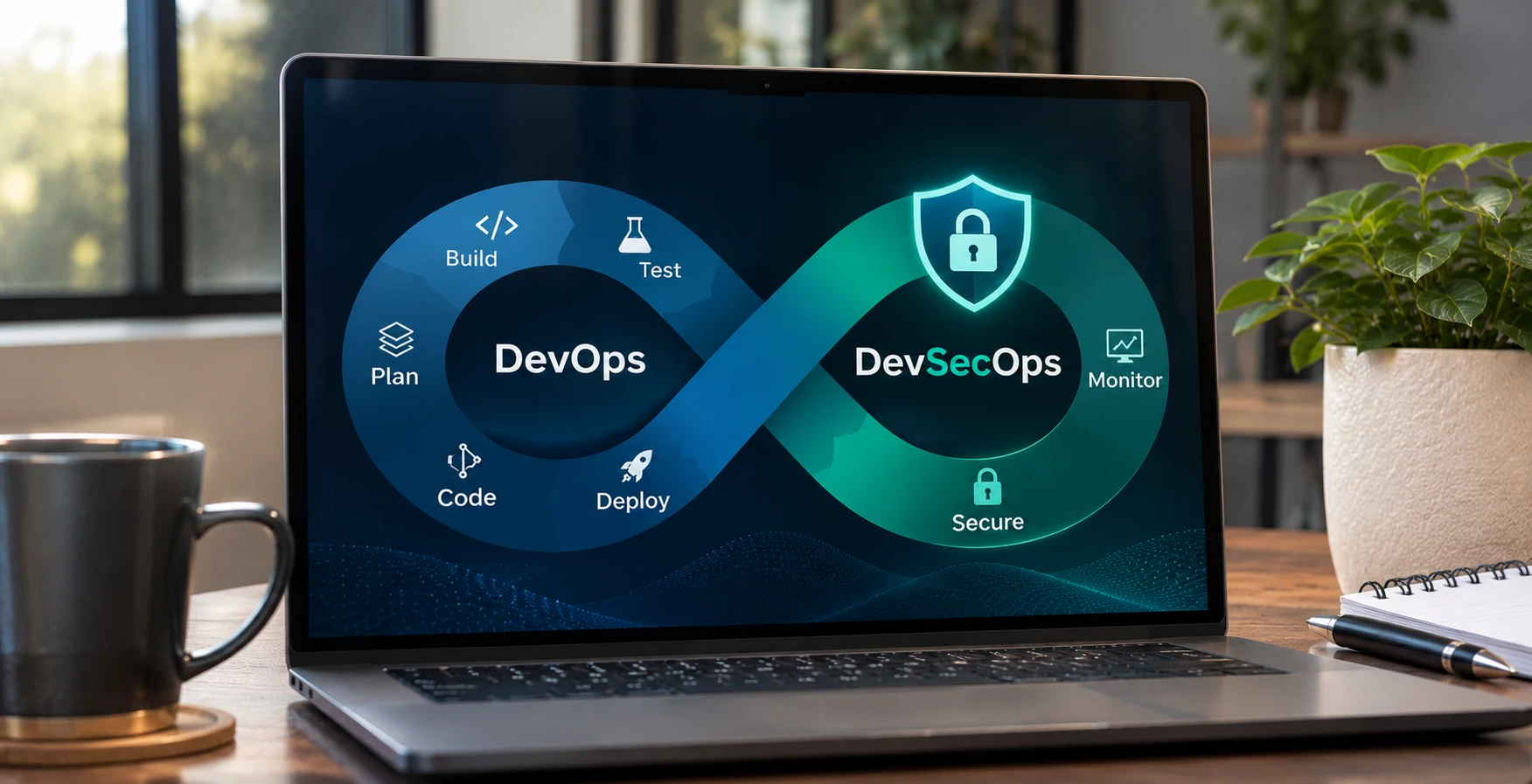
DevOps vs DevSecOps: The Difference, a Comparison Table and When You Need It
November 28, 2026
DevOps vs DevSecOps explained: the clear difference, a side-by-side table, what security adds at each pipeline stage and when regulated data requires it.
How Much Does It Cost to Build an App? Native, Web and Cross-Platform Compared
November 28, 2026
How much does it cost to build an app? Compare native iOS and Android, web and cross-platform, plus backend, design, store fees and upkeep costs.