

SOC 1 vs SOC 2: What Is the Difference and Which Do You Need?
SOC 1 vs SOC 2 explained: what each report covers, who reads it, a side-by-side table, and how to tell which one your customers are asking for.
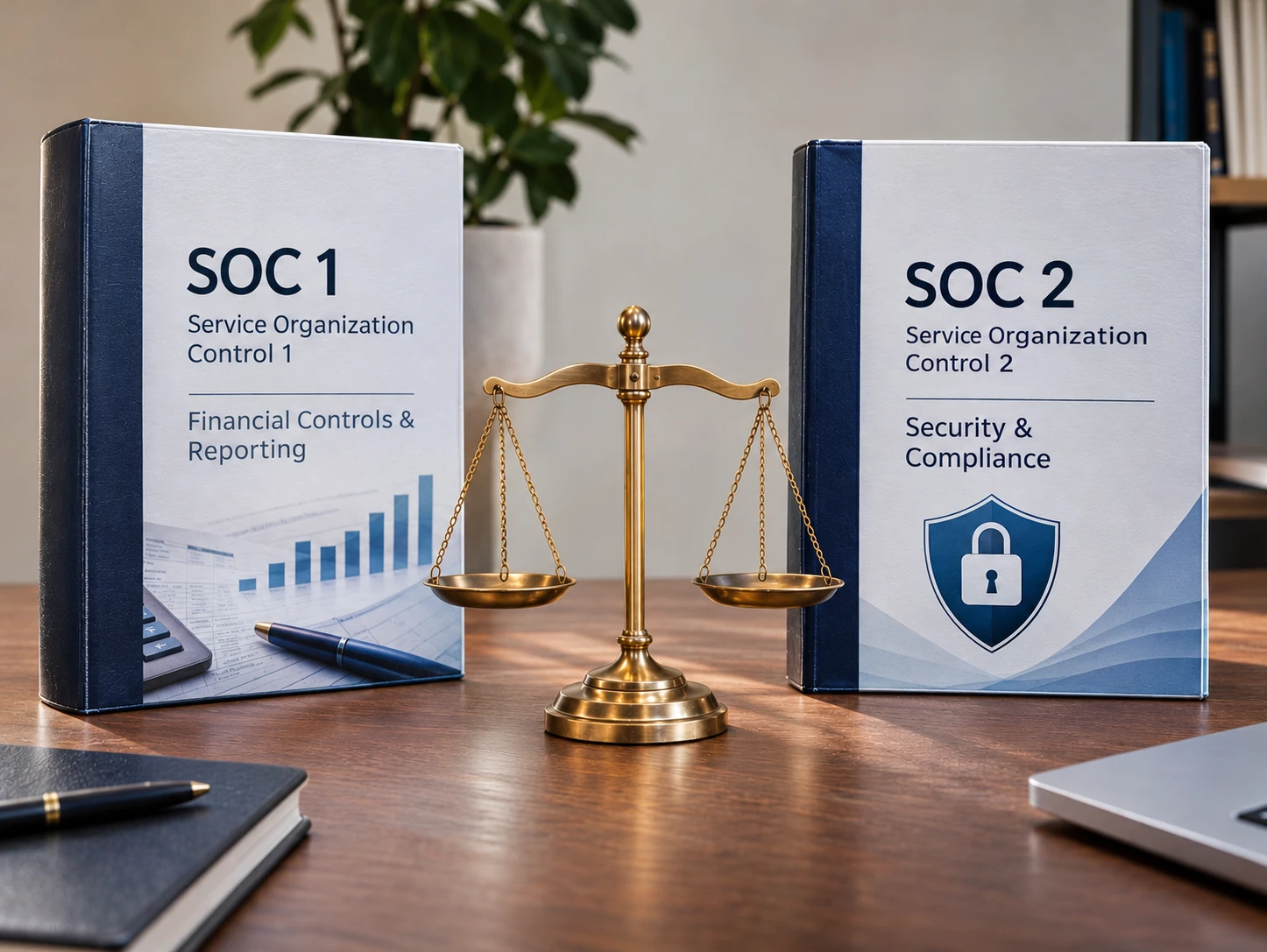
SOC 1 vs SOC 2 comes down to the subject of the report. A SOC 1 report covers the controls that affect your customers' financial reporting. A SOC 2 report covers the controls that protect customer data and systems: security, availability, processing integrity, confidentiality and privacy. Both are issued by an independent CPA firm under AICPA standards, and some companies need both.
This guide explains the difference between SOC 1 and SOC 2 in plain language, with a comparison table and a short test for deciding which one you need. Nebustream has been examined under SOC 2 ourselves, so we can speak to that side from experience. We are not a CPA firm and we do not issue either report.
What Are SOC Reports?
SOC stands for System and Organization Controls. The AICPA (the American Institute of CPAs) describes it as a suite of service offerings that CPAs may provide on the controls of a service organization. A service organization is any company that runs a process or system on behalf of other companies, such as a payroll provider or a SaaS vendor.
The reports exist so that customers can judge the risk of outsourcing without auditing every vendor themselves. The vendor hires a CPA firm, the firm tests the controls, and the vendor hands the resulting report to customers.
One point matters for everything below. A SOC report is an attestation report, not a certification. Nobody issues you a badge. A licensed CPA examines your controls and writes an opinion. The Journal of Accountancy, the AICPA's own magazine, puts it plainly in a 2026 episode: SOC 2 is not a certification, it is an examination-level attestation engagement signed by a licensed CPA.
The AICPA suite includes SOC 1, SOC 2, SOC 3, SOC for Cybersecurity and SOC for Supply Chain. For most software companies the real choice is between the first two.
What Is a SOC 1 Report?
The AICPA describes SOC 1 as an examination of controls at a service organization that are likely to be relevant to user entities' internal control over financial reporting. The readers are your customers (the "user entities") and the CPAs who audit those customers' financial statements (the "user auditors").
In other words, SOC 1 answers one question: could a weakness in your controls cause a misstatement in your customer's financial statements?
Think of a payroll processor, a payment processor, or a company that calculates invoices or collects money for other businesses. If your customer's accountants must rely on your numbers, they will ask for SOC 1. The control objectives in a SOC 1 are written around how your service touches your customers' financial reporting, so each report is more tailored than a SOC 2.
A pure software company that stores data but never touches your customers' financial figures usually does not need a SOC 1.
What Is a SOC 2 Report?
SOC 2 is an AICPA examination of a service organization's description of its system and the controls inside it. The AICPA's SOC 2 guide says the controls are measured against the Trust Services Criteria, which cover five categories:
- Security: protection against unauthorized access and other threats.
- Availability: the system is available as you committed.
- Processing integrity: processing is complete, valid and accurate.
- Confidentiality: confidential information is protected as promised.
- Privacy: personal information is handled as you said it would be.
Security is the one category every SOC 2 report includes. The other four are optional, and you choose them based on what you promise customers (Cloud Security Alliance explainer). The AICPA publishes the criteria as the 2017 Trust Services Criteria with revised points of focus (2022).
SOC 2 is the report most software and SaaS buyers mean when they ask whether you are "SOC 2 compliant". Our own company has been examined under SOC 2 for security, availability, and confidentiality, and you can read about that in our SOC 2 story.
SOC 1 vs SOC 2: Side-by-Side Comparison
Here is the difference between SOC 1 and SOC 2 on the points that matter in a buying decision.
| SOC 1 | SOC 2 | |
|---|---|---|
| What it covers | Controls relevant to your customers' internal control over financial reporting | Controls relevant to security, availability, processing integrity, confidentiality and privacy |
| Framework | Control objectives you define around your customers' financial reporting | AICPA Trust Services Criteria |
| Main readers | Customers and their financial statement auditors | Customers, security and procurement teams, and their advisors |
| Typical vendors | Payroll, payment processing, billing, outsourced finance functions | SaaS, cloud, hosting, data and software service providers |
| Report types | Type 1 and Type 2 | Type 1 and Type 2 |
| Distribution | Restricted to management, customers and user auditors | Generally restricted; commonly shared under NDA |
| Issued by | An independent CPA firm | An independent CPA firm |
| Pass or fail? | Opinion in a report, not a certificate | Opinion in a report, not a certificate |
The report-type and distribution rows come from the Journal of Accountancy's explainer, The three faces of SOC (2016). It says both SOC 1 and SOC 2 come as Type 1 or Type 2, that SOC 1 use is restricted to management, user entities and user auditors, and that SOC 2 use is generally restricted. Standards get revised, so confirm the current rules with your CPA firm. We explain Type 1 and Type 2 in SOC 2 Type 1 vs Type 2.
A quick way to remember it: SOC 1 is about your customers' money reporting. SOC 2 is about your customers' data and systems. If a customer's auditor needs your numbers, think SOC 1. If a customer's security team needs your safeguards, think SOC 2.
Do You Need SOC 1, SOC 2, or Both?
Use these questions to decide which of SOC 1 and SOC 2 applies to you.
- Do customers rely on your system for their financial statements? If you process payroll, payments, billing or similar functions, SOC 1 is likely to come up.
- Do customers send you sensitive data to store or process? If yes, expect security questionnaires and SOC 2 requests.
- What does the contract or questionnaire name? The most reliable answer is your buyer's own request. Ask which report, which type and which criteria they expect.
- Do you do both? A company that processes financial transactions and also holds sensitive customer records can end up needing both reports. They are separate examinations with separate scopes.
If you sell software to enterprises or to government programs, the request is much more often SOC 2. Related requirements often arrive in the same deal, such as HIPAA or IRS Publication 1075. Our SOC 2 compliance page explains how we help with readiness.
Do not pick a report because a competitor has it. Pick the one your customers' reviewers will read. Preparing for the wrong one costs time and does not help the deal.
How to Prepare for Either Report
Both reports ask the same underlying question: do you do what you say you do, and can you show it? The preparation looks similar:
- Set the scope. Decide which systems, services and data are covered.
- Find the gaps. Compare your current practices with what the report expects.
- Fix and document. Close the gaps and write down how each control works and who owns it.
- Collect evidence. Keep records such as access reviews and change history, so an examiner can test them.
- Engage a CPA firm. The firm performs the examination and writes the report.
Security architecture, cloud configuration and the delivery pipeline are where an engineering team can help most. Our information security services cover assessments and cloud security, and our DevSecOps services build code scanning and change records into the pipeline. For a step-by-step version, see our SOC 2 compliance checklist.
We do not act as your auditor, and we do not promise a result. The CPA firm decides what its report says.
SOC 1 vs SOC 2: Common Questions
What is the difference between SOC 1 and SOC 2 in one sentence?
SOC 1 reports on controls that matter to your customers' financial reporting, and SOC 2 reports on controls that protect customer data and systems under the Trust Services Criteria.
Is SOC 2 harder than SOC 1?
Neither is simply harder. SOC 2 uses a fixed set of criteria, while SOC 1 uses control objectives you define around financial reporting. The effort depends on your scope, your environment and how well your controls are already documented.
Can a company have SOC 1 and SOC 2 reports at the same time?
Yes. Some service organizations need both, for example when they process financial transactions and also hold sensitive customer data. Each is a separate examination.
Are SOC 1 and SOC 2 certifications?
No. They are attestation reports written by a CPA firm. The firm gives an opinion on your controls, and you share the report with customers. Nobody is "certified" by it.
Does SOC 2 replace a security questionnaire?
It often shortens one. Customers can read the report instead of asking you to answer every question from scratch, though some will still send follow-up questions.
Which one should a software startup get first?
Usually SOC 2, because software buyers ask for it. Confirm with your prospects before you commit, and start with the criteria they actually need.
Not sure which report your customers want?
Tell us what your buyers are asking for. We will help you scope the right examination and get the engineering ready before a CPA firm begins.
More Articles

Custom Software Development Cost: What Drives It and How to Estimate Yours
November 28, 2026
Custom software development cost explained: the six cost drivers, a breakdown by phase, a simple way to estimate your own project and ways to spend less.
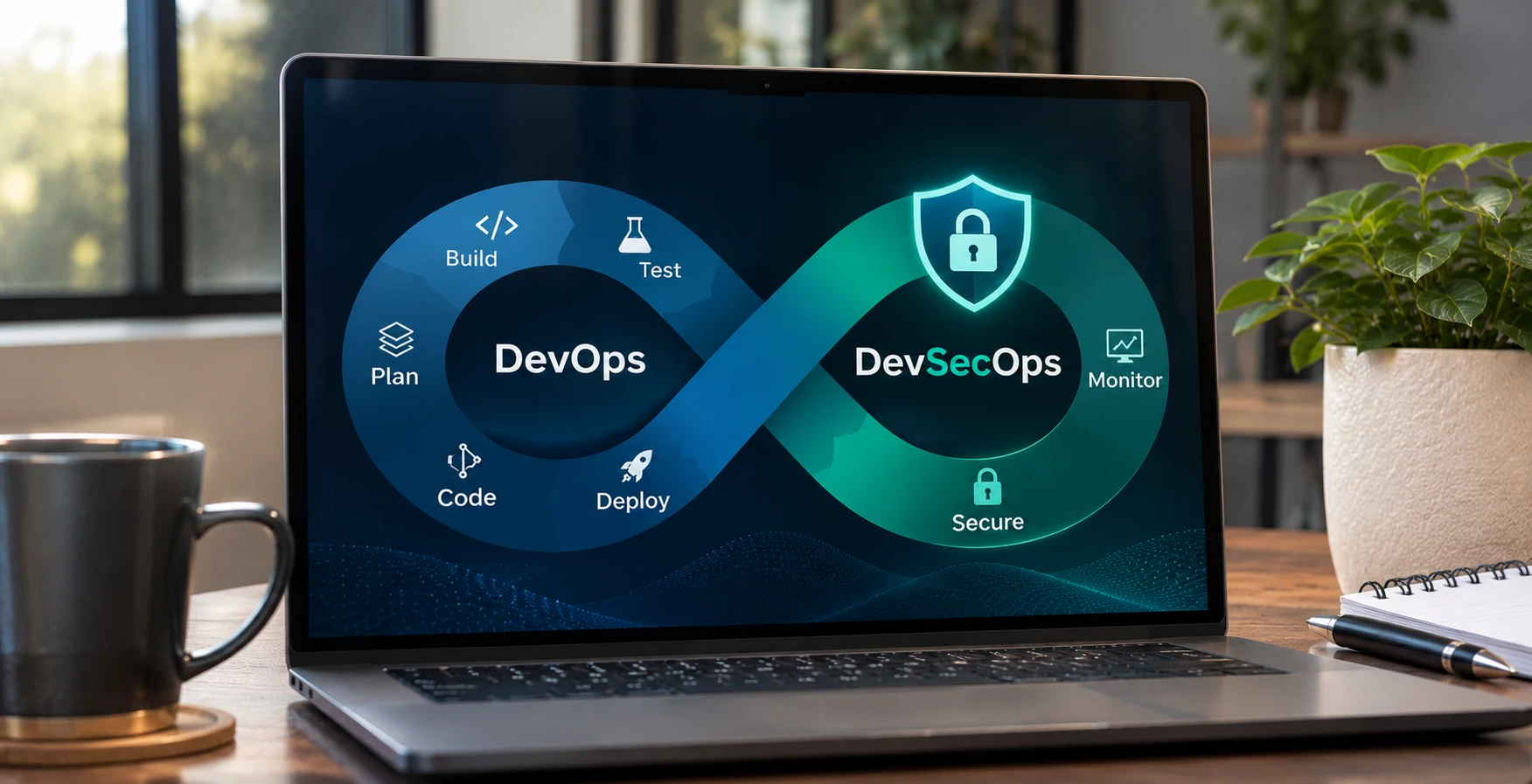
DevOps vs DevSecOps: The Difference, a Comparison Table and When You Need It
November 28, 2026
DevOps vs DevSecOps explained: the clear difference, a side-by-side table, what security adds at each pipeline stage and when regulated data requires it.
How Much Does It Cost to Build an App? Native, Web and Cross-Platform Compared
November 28, 2026
How much does it cost to build an app? Compare native iOS and Android, web and cross-platform, plus backend, design, store fees and upkeep costs.