

Custom Software Development Cost: What Drives It and How to Estimate Yours
Custom software development cost explained: the six cost drivers, a breakdown by phase, a simple way to estimate your own project and ways to spend less.

Custom software development cost comes down to one formula: the hours of design, building, testing and launch work your project needs, multiplied by the rate of the team doing it, plus what it costs to run the software afterwards. Scope, integrations, compliance, design, team model and maintenance change those hours and that rate. This guide shows how, and how to estimate your own project.
We don't publish price lists for custom projects, and we won't invent a "typical" number for you. Real quotes vary widely with scope, so instead of a made-up range you get the drivers, a phase-by-phase breakdown, one verified labor figure and a worksheet you can fill in before you talk to any vendor.
How much does custom software development cost?
The honest answer is "it depends on scope", and the reason is simple. Custom software is built to your requirements, so no two projects need the same number of hours. A small internal tool with one type of user and no outside connections is a very different project from a customer portal that talks to your billing system, handles health data and has to pass a security review.
You can still reason about price without a quote. Every estimate, from any vendor, is built from the same three pieces:
- Hours. How much design, development, testing and project management the work takes.
- Rate. What each of those hours costs. Rates differ by role, by location and by whether you hire a company, freelancers or your own staff.
- Running costs. Hosting, monitoring, fixes and updates after launch. These continue for as long as the software is in use.
We do know one anchor from official data. The U.S. Bureau of Labor Statistics reports a median annual wage of $135,980 for software developers in May 2025 and $104,300 for software quality assurance analysts and testers (BLS Occupational Outlook Handbook, page updated August 2026). Spread over a 2,080-hour work year, that is roughly $65 an hour for a developer and $50 an hour for a tester.
Read this number carefully: those are wages paid to employees, not what a software company charges. A billing rate also has to cover benefits, equipment, management, design, testing, security, and time between projects. Treat the BLS figures as a floor for your own sanity checks, not as a quote. Real quotes vary, so ask any vendor to show how their rate and hours add up.
What drives custom software development cost
Six factors explain most of the difference between a small project and a large one. The effects below are directional, not measured, and any one of them can dominate the budget.
1. Scope
Scope is the list of what the software must do: how many user types, screens, reports, rules and workflows. It is the biggest driver because every feature carries design, build and test hours. The two most common cost problems are a long feature list nobody ranked and requirements that change halfway through. Writing down what you need now and what can wait is the cheapest way to control price.
2. Integrations
Connecting to other systems, such as an accounting package, a CRM, a payment processor or an older internal database, takes more effort than most buyers expect. A system with a clean, documented API (the interface two programs use to talk to each other) is much quicker than one with no API or poor documentation. Count the systems your software must read from and write to, and check which ones have documentation. Our system integration team often finds integration is the part of a project that deserves the most scoping time.
3. Compliance and security
If the software handles health records, tax information, student data or government data, you add access controls, audit logging, data retention rules, security testing and review time. Rules such as HIPAA change the architecture, not just the paperwork, so raise them at the start. For context, Nebustream's own security program has been examined under SOC 2 for security, availability and confidentiality, and we explain what that involves in our SOC 2 guide for startups.
4. Design and user experience
A rough internal tool that five trained staff will use can have a simple interface. A public product used by thousands of strangers needs research, prototypes, usability testing and accessibility work, which add hours but reduce expensive rework later. A design done before development starts is far cheaper to change than software that is already built.
5. Team model
Who builds it affects both rate and risk. A freelancer can cost less per hour but you carry the management and the risk if they become unavailable. An in-house team gives you control but adds hiring time, salaries and benefits. A development company brings a full team (design, engineering, testing, project management) at a higher hourly rate but with less coordination work for you. Location also matters: the same role is paid differently in different regions.
6. Maintenance and ongoing support
Software is never "done". Operating systems, browsers, libraries and security threats change, and your business will ask for new features. Budget for hosting, monitoring, bug fixes, security patches and improvements. If you build on AWS, our guide to cloud cost optimization explains how running costs behave over time.
Software development cost breakdown by phase
A useful software development cost breakdown follows the order of the work. Phases overlap in agile projects, but each one has its own cost logic. When you compare quotes, check that every phase below is accounted for somewhere.
| Phase | What happens | What makes it bigger |
|---|---|---|
| Discovery and planning | Goals, users, requirements, ranked feature list, release plan | Many stakeholders, unclear requirements, regulated data |
| UX/UI design | Research, wireframes, prototypes, visual design, accessibility | Many screens, public users, accessibility rules |
| Front-end development | What users see and click in the browser or app | Complex interactions, many screens, several devices |
| Back-end development | Business rules, databases, user accounts, APIs | Complex workflows, large data volumes, reporting |
| Integrations | Connections to payment, CRM, ERP and other systems | Number of systems, poor or missing APIs |
| Testing and QA | Automated tests, manual testing, security testing | Compliance needs, number of user types and devices |
| Deployment and infrastructure | Cloud setup, pipelines, monitoring, backups | Uptime requirements, security reviews, scale |
| Project management | Planning, demos, communication, risk tracking | Team size, number of stakeholders |
| After launch | Hosting, fixes, updates, new features | Usage, rate of change, support hours |
Two points about this table. First, testing is not a luxury line to trim. Defects found after launch cost more to fix than defects found during a sprint, so a quote with no testing line is a warning sign. Second, discovery is cheap compared to what it saves, because the questions it answers would otherwise be answered during development, at full team rates.
On our agile software development projects we work in two-week sprints that end in a demo of working software, so you see where hours are going throughout the project instead of at the end.
How to estimate software development cost: a step-by-step method
You don't need to be a developer to build a first estimate. This simple method gives you a rough number and, more importantly, a clear list to review with a vendor. It is also how to calculate software development cost without trusting a single quote. Use it to check that proposals are complete.
- List the users and what each one needs to do. Write short sentences such as "A dispatcher assigns a job" or "A customer downloads an invoice". Each sentence becomes a feature.
- Rank every feature. Mark each as must-have, should-have or later. Only must-haves belong in the first estimate.
- Size each feature. Use small, medium and large. Ask a developer to translate those sizes into days of work. Developers estimate their own tasks better than they estimate whole projects.
- List the integrations. For each outside system, note whether it has a documented API. An undocumented system should be sized as large until someone proves otherwise.
- Add the work that isn't a feature. Design, testing, deployment, security work and project management all need hours. Ask the vendor to show them as separate lines.
- Multiply by the rate. Hours for each role times that role's rate gives the build estimate. This is the formula behind every quote.
- Add a buffer. Estimates are made before the unknowns are known. Ask the vendor how much buffer they recommend and what it covers.
- Add running costs. Hosting, monitoring, support and a yearly improvement budget belong in the total cost of ownership, not in a separate conversation.
You can copy this worksheet into a spreadsheet:
| Item | Size (S / M / L) | Hours | Rate | Cost |
|---|---|---|---|---|
| Feature 1: ______ | ||||
| Feature 2: ______ | ||||
| Integration 1: ______ | ||||
| Design | ||||
| Testing and QA | ||||
| Deployment and security | ||||
| Project management | ||||
| Build subtotal | ||||
| Buffer | ||||
| Yearly running costs |
If two vendors' totals differ a lot, compare the sheets, not the totals. The gap almost always comes from a different scope, a missing phase or a different assumption about who handles testing.
How to reduce custom software development cost
Spending less does not mean cutting quality. It means paying for the right things in the right order.
- Build a minimum viable product first. An MVP is the smallest version that tests your riskiest assumption with real users. It keeps the first budget small and replaces guesses with evidence. See how we approach MVP development.
- Deliver in phases. Release the core workflow first, then add features that users actually ask for. Each phase has its own budget and its own decision point, so you can stop or change direction.
- Fix scope before you start. A ranked list of must-haves, with "later" items clearly parked, prevents the slow growth that drives most overruns.
- Use off-the-shelf tools where your process is standard. Payroll, email and basic accounting rarely justify custom software. Our guide to custom software vs off-the-shelf tools explains where each wins.
- Design before you build. Testing a prototype with real users costs far less than rebuilding a finished screen.
- Prepare your data and decisions. Delays waiting for content, approvals or access to other systems cost team hours too.
- Ask for working software often. Demos every two weeks expose a wrong turn after days, not months.
If you are in North Texas, our page on custom software development in Dallas describes how we work with local teams on Central Time. For web-based products, see our web application development service.
Common questions about software development costs
Why do two quotes for the same project differ so much?
Usually because the scope is not the same. One vendor may include design, testing and security work and the other may not, or they may assume different integrations. Compare the phase lines and assumptions before you compare totals.
Is a fixed price or time-and-materials better?
A fixed price works when scope is clear and unlikely to change. Time-and-materials, where you pay for hours worked, suits projects where you expect to learn as you go. Many teams use a fixed price for each phase, which gives a firm number without locking in the whole project.
What does it cost to keep custom software running?
It depends on hosting needs, usage, security requirements and how often you want new features. Plan for hosting and monitoring, bug fixes, security patches and a yearly improvement budget. Ask your vendor to itemize each one.
Can I calculate software development cost before talking to a vendor?
You can get a rough picture using the step-by-step method above. The worksheet gives you a ranked feature list, sizes and a place for each phase. A vendor will refine the hours, but you will already know what you are paying for.
Do you publish prices for custom projects?
No. Prices depend on your scope, so we scope first. Our free 30-minute discovery call is with the engineers who would do the work, and you leave with a clearer idea of phases and next steps.
Want an estimate built around your project?
Tell us what the software needs to do, who will use it and which systems it must connect to. We'll talk through scope and phases on a free 30-minute call with the engineers who would do the work.
More Articles
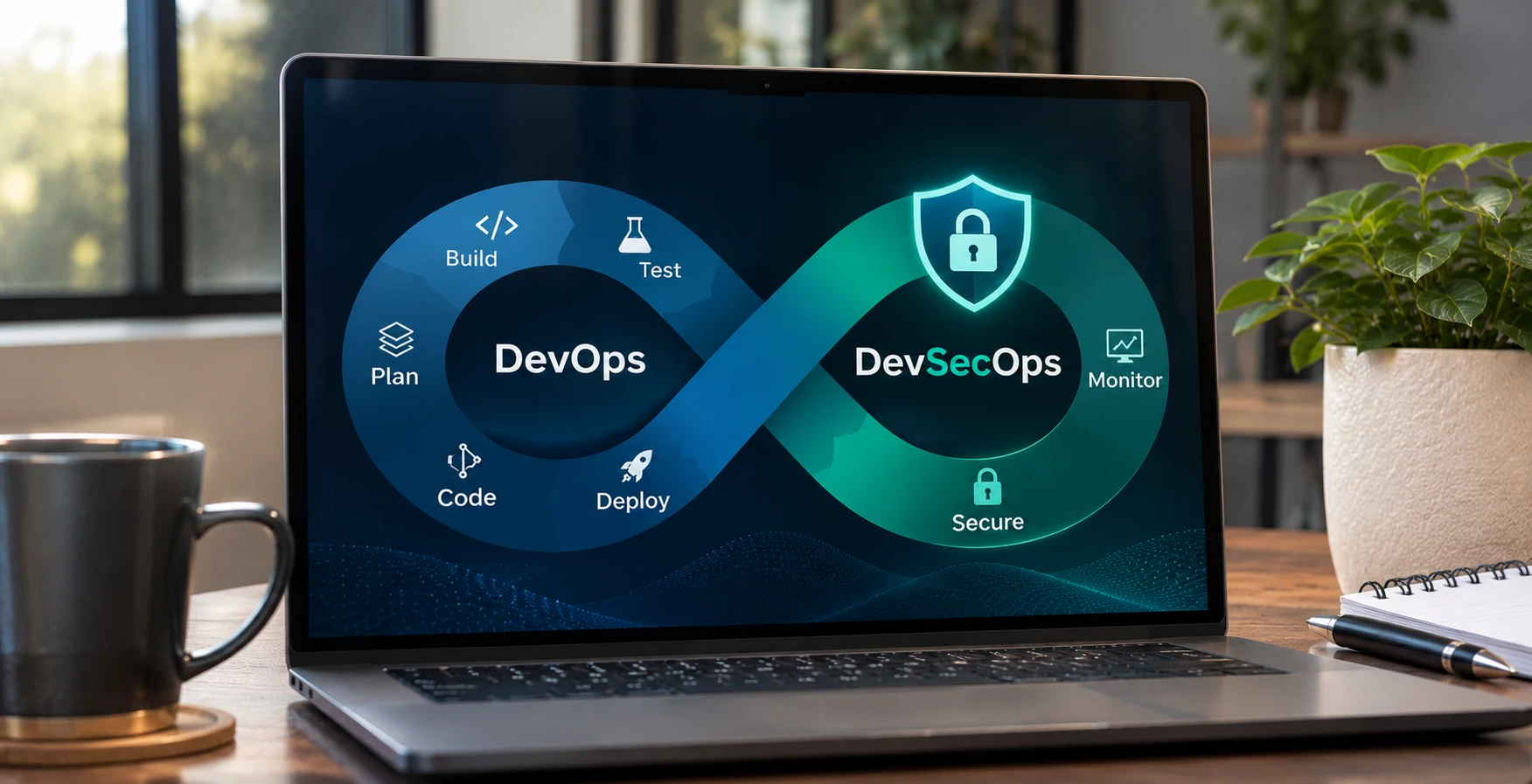
DevOps vs DevSecOps: The Difference, a Comparison Table and When You Need It
November 28, 2026
DevOps vs DevSecOps explained: the clear difference, a side-by-side table, what security adds at each pipeline stage and when regulated data requires it.
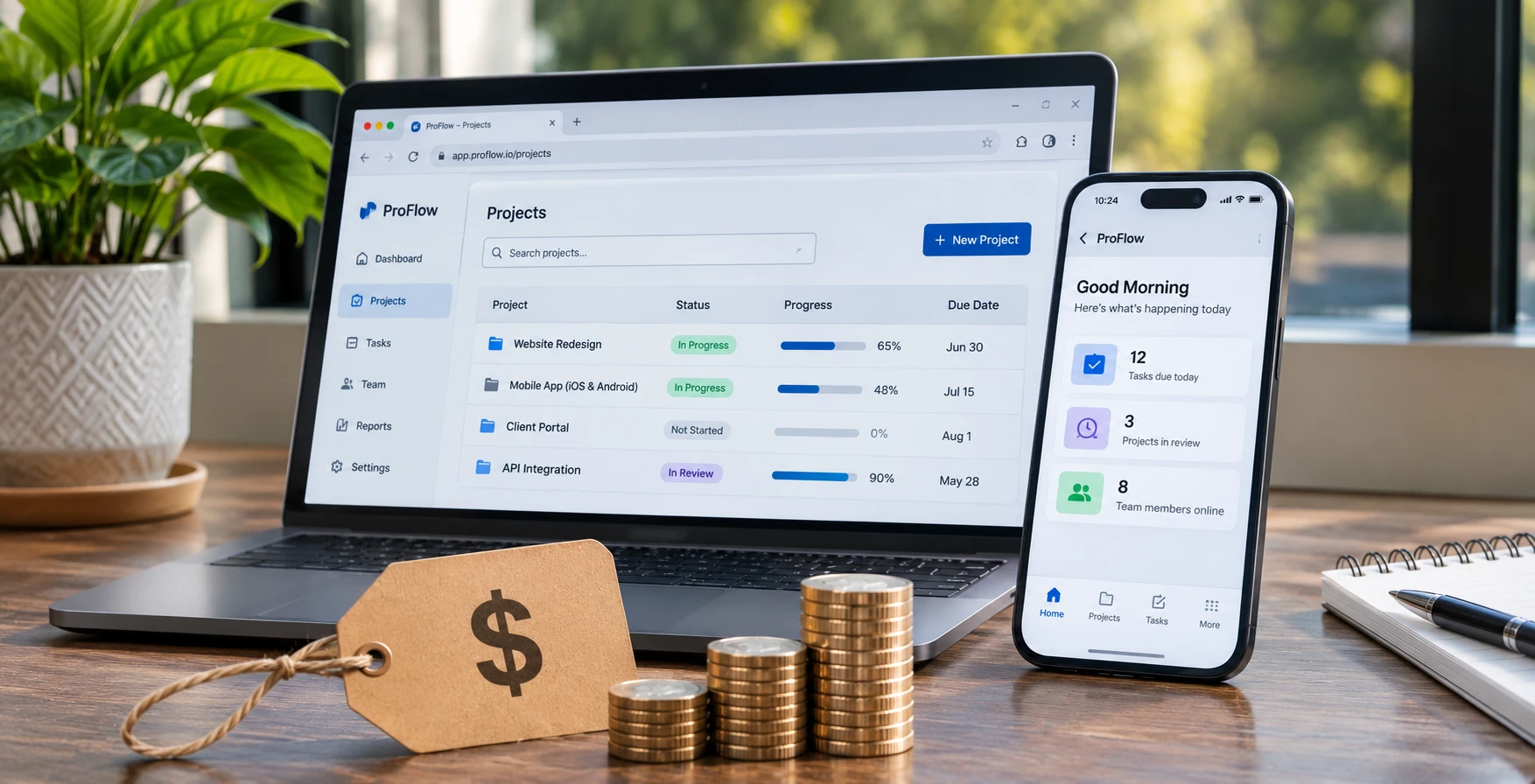
How Much Does It Cost to Build an App? Native, Web and Cross-Platform Compared
November 28, 2026
How much does it cost to build an app? Compare native iOS and Android, web and cross-platform, plus backend, design, store fees and upkeep costs.

Is Claude HIPAA Compliant? What Anthropic and OpenAI Actually Cover (2026)
November 28, 2026
Is Claude HIPAA compliant? What Anthropic's BAA covers, how ChatGPT compares, and what a HIPAA compliant chatbot needs beyond the model. As of November 2026.