
Is Claude HIPAA Compliant? What Anthropic and OpenAI Actually Cover (2026)
Is Claude HIPAA compliant? What Anthropic's BAA covers, how ChatGPT compares, and what a HIPAA compliant chatbot needs beyond the model. As of November 2026.
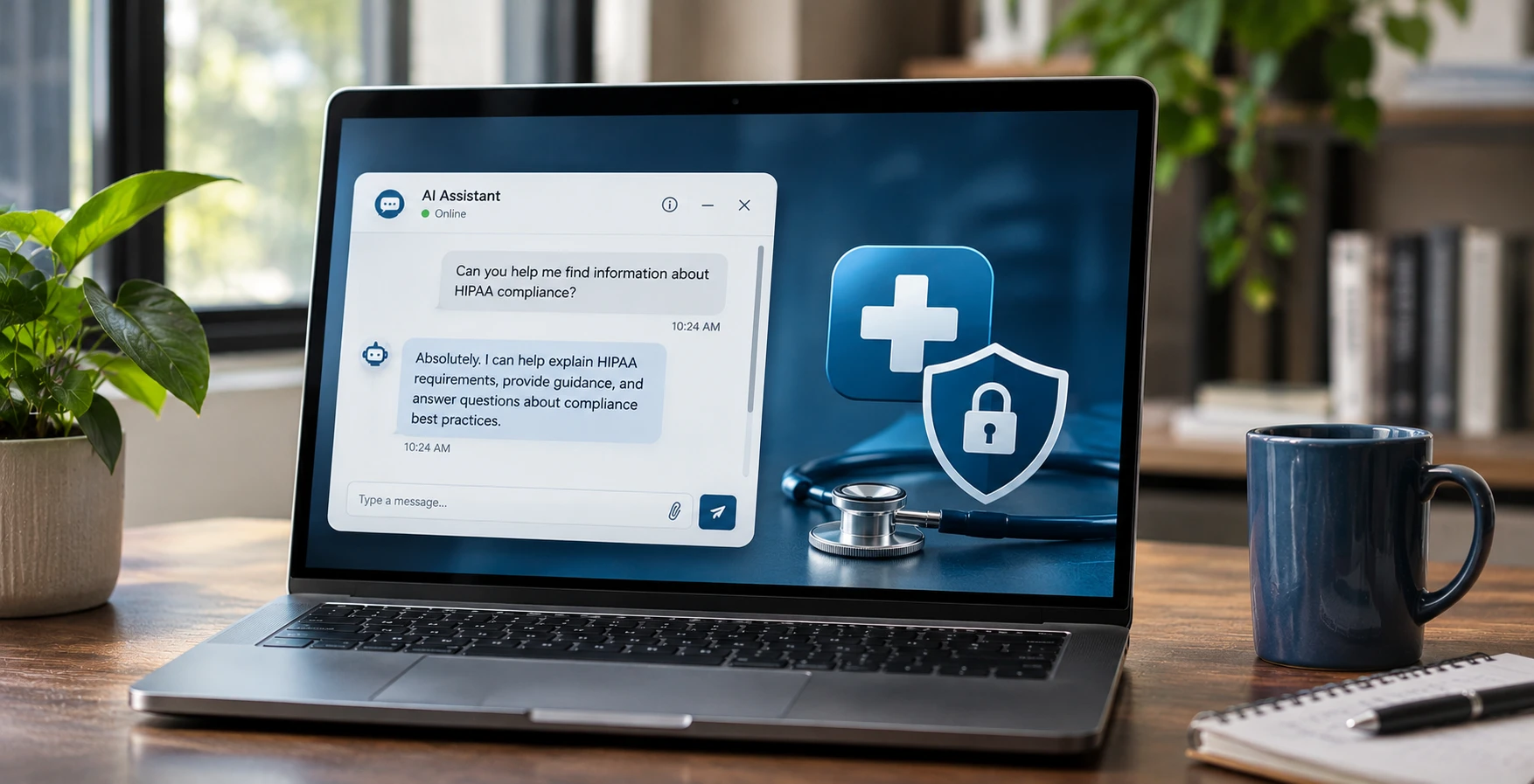
Is Claude HIPAA compliant? Not by itself. As of November 2026, Anthropic offers a Business Associate Agreement (BAA) for certain commercial products, including its first-party API and Claude Enterprise plans, but only when the right plan and settings are in place. Free, Pro, Max and Team plans cannot enable HIPAA. OpenAI is similar: a BAA is available for the API and for ChatGPT Enterprise or Edu on a sales-managed basis, and not for ChatGPT Business.
A signed BAA is only one piece. A HIPAA compliant chatbot depends on the whole system around the model: the agreement, how it is configured, who can access it, what is logged and how little patient data it sees. This guide summarizes what each vendor says in its own documentation, then explains what you still have to build.
Read this first. Vendor policies change often, and this article is not legal advice. Everything below reflects the vendors' official help pages as of November 2026, linked inline. Before you send protected health information (PHI) to any AI service, confirm the current terms with the vendor and your own counsel.
Is Claude HIPAA compliant? What Anthropic says
No AI model is "HIPAA compliant" on its own, and that includes Claude. What Anthropic offers is a BAA and a set of products it calls HIPAA-ready. Here is what its official pages say, as of November 2026.
A BAA is available for some commercial products. Anthropic's BAA article for commercial customers says it covers commercial products such as Claude for Work and the Anthropic API. The BAA covers only the single organization that accepted it.
Claude Enterprise needs action from the Primary Owner. Per the same page, standard Claude Enterprise plans do not include BAA coverage until a Primary Owner enables HIPAA under "Data and privacy" in organization settings and accepts the BAA. Anthropic's HIPAA-ready Enterprise plans article adds that enabling HIPAA resets some organization settings to defaults and cannot be reversed from organization settings.
Team and individual plans cannot enable HIPAA. The same article states that Team plans and individual plans (Free, Pro, Max and Ultra) cannot turn on HIPAA. Do not put PHI into them.
The first-party API needs a signed BAA and activation. According to the BAA article, the Primary Owner signs a BAA and then contacts Anthropic or its sales team to enable PHI use on the API. Anthropic's page lists which Messages API features are covered. It also lists features that are not covered or not accessible on a HIPAA-ready API organization, such as the Batch API, the Files API (beta) and Web Fetch. The page says features not listed are not covered.
Claude Code and Cowork need an extra configuration. For Claude Code and Cowork running locally on a member's computer, the Primary Owner must also apply a separate "HIPAA configuration." Anthropic's help pages say that configuration is currently available to organizations with an Anthropic account team, and that cloud sessions are unavailable once it is applied.
Some features are available but not covered. On the Enterprise plan, Anthropic lists features such as connectors and MCP servers, skills, Claude in Chrome and some Microsoft 365 features as available but not covered by the BAA. The page says to process PHI only with features marked as covered.
Covered models use 30-day retention. Anthropic's Covered Models article says Covered Models require 30-day data retention and cannot be used from a zero-data-retention organization or workspace. That article does not name specific models, so confirm which models are covered for your organization.
Dates matter. Anthropic says BAAs signed before December 2, 2025 cover only API usage and do not extend to the Enterprise plan, so those customers need a new BAA through their account team. Anthropic also ties coverage of some features to the version of the BAA accepted, so check which version you signed.
What we could not verify: Anthropic's Implementation Guide on its Trust Center is described as the authoritative source for the status of each feature, and we could not read it as a public page. The Claude Code and Cowork HIPAA configuration is described as available only through an Anthropic account team, so confirm eligibility and timing with Anthropic directly.
Is ChatGPT HIPAA compliant? What OpenAI says
The searches for a HIPAA compliant ChatGPT have the same answer: the product alone is not compliant, but OpenAI offers a BAA for specific products. As of November 2026, OpenAI's pages say the following.
API. OpenAI's BAA help article says an enterprise agreement is not required to sign a BAA for API services. An organization admin enables "HIPAA compliance support" in the API Platform settings and accepts the Business Associate and Healthcare Addendum. Self-serve enrollment requires an established history of API usage. Once enabled, it cannot be disabled in the API Platform settings.
Required API configuration. OpenAI's HIPAA eligible products page lists "API with Modified Retention" as the eligible API product, and says API eligibility requires that your organization be provisioned with Modified Retention, unless OpenAI specifies otherwise. The page lists the API endpoints that are eligible.
ChatGPT. The same page lists ChatGPT for Healthcare, ChatGPT for Enterprise with Regulated Workspace, ChatGPT FedRAMP and ChatGPT for Clinicians as HIPAA eligible, alongside the API products. The help article says a BAA for ChatGPT Enterprise or Edu is handled through sales, and that individual eligible clinicians have a separate in-product BAA flow for ChatGPT for Clinicians.
ChatGPT Business has no BAA. The BAA article states plainly that OpenAI does not offer a BAA for ChatGPT Business. The consumer plans (Free, Plus and Pro) do not appear on the eligible products list, so treat them as not eligible and keep PHI out of them. OpenAI's pages we reviewed do not discuss the consumer plans directly, so confirm with OpenAI if you need a firm answer.
Features are covered one by one. OpenAI's eligible products page lists covered and not-covered ChatGPT features, and says features not listed are not automatically covered. For features that are not covered, it says PHI should not be entered. Examples it lists as not covered include network access in the cloud and the improved memory feature.
Customer responsibilities are in the HIPAA guide. OpenAI's HIPAA guide assigns tasks to the customer, including configuring single sign-on and other access controls, securing the devices people use, monitoring end-user activity, and keeping PHI out of file names, user profile data and support requests. We could only partially read the PDF, so use it as a pointer and read the full text.
Claude vs ChatGPT for HIPAA: side-by-side summary
This table summarizes the vendors' own pages as of November 2026. It is a starting point, not a substitute for reading the current terms.
| Anthropic (Claude) | OpenAI (ChatGPT and API) | |
|---|---|---|
| Free, Pro, Max, Plus plans | Cannot enable HIPAA | Not on the eligible products list |
| Team or Business plan | Team cannot enable HIPAA | OpenAI does not offer a BAA for ChatGPT Business |
| Enterprise | BAA available; Primary Owner must enable HIPAA and accept the BAA | BAA via sales for ChatGPT Enterprise or Edu; Enterprise with Regulated Workspace is listed |
| API | BAA signed, then PHI use enabled with Anthropic or sales | BAA accepted in API Platform settings; eligibility requires Modified Retention |
| Retention condition | Covered Models require 30-day retention | API eligibility tied to Modified Retention |
| Not covered by default | Connectors, MCP servers, skills, Claude in Chrome and others, as listed | Features listed as not covered, such as improved memory |
| Who handles access control and logging | Customer | Customer |
The last row is the important one. Neither vendor takes over your access controls, user management or logging.
What makes a chatbot HIPAA compliant?
A HIPAA compliant chatbot is not a model with a badge. HIPAA compliance describes an organization: how the system is built, configured and operated, together with policies, workforce training and agreements. No software product or cloud platform is HIPAA compliant on its own, and there is no government HIPAA seal of approval.
The Security Rule is risk-based. It covers electronic protected health information (ePHI) and requires administrative, physical and technical safeguards, applied in a way that fits your size and systems. The U.S. Department of Health and Human Services (HHS) also says that a cloud provider that stores or processes ePHI for a covered entity is a business associate, even if it holds only encrypted data, and that the covered entity needs a BAA with it. See HHS's guidance on HIPAA and cloud computing.
In practice, a compliant chatbot needs five things working together:
- A BAA with every vendor that touches PHI. That includes the model provider, the cloud host, the messaging channel and any analytics or logging service. A BAA with one vendor does not cover the others.
- The right configuration. Use only the plan, features and retention settings the vendor says are covered. Turn off features that are not.
- Access controls. Single sign-on, role-based access, least privilege and a process for removing access when people leave.
- Logging and monitoring. Audit logs that show who accessed what, alerts for unusual activity and a plan for responding to an incident.
- PHI minimization. Send the model only what it needs. Where you can, strip names and identifiers, and avoid putting PHI in prompts, file names, profile fields or support tickets.
You also need to keep your own risk analysis current. HHS expects covered entities and business associates to assess risks to ePHI, and a new AI service is a new risk to assess.
Why the model is not the whole story: an Enterprise plan with a signed BAA can still be misused if staff paste PHI into a feature the BAA does not cover, if access is shared among users or if nobody reviews logs. The agreement helps. The system around it decides whether you are protected.
How to build a HIPAA compliant chatbot in practice
If you want a chatbot that handles patient information, here is a sensible order of work.
- Decide whether the bot needs PHI at all. Many tasks, such as answering general questions about services, hours or insurance accepted, need no patient data. A bot that never sees PHI is far simpler to defend.
- Map the data flow. Trace where PHI enters, which systems store it, which vendors process it and who can reach it.
- Choose vendors that will sign a BAA, and confirm the covered products. For each vendor, confirm which plans, features and settings the BAA covers, and record that decision.
- Design access and logging first. Authentication, role-based access, audit trails and retention rules are easier to build in than to add later.
- Add guardrails. Limit what the bot can say, route clinical questions to a person and test how it behaves with unusual or adversarial input.
- Monitor and review. Review conversations and logs on a schedule, and re-check vendor terms when they update.
We build this kind of system. Our AI chatbot development team designs bots around your data, your systems and your compliance requirements, and our healthcare software development practice works on software that handles health information. We have experience defining security architectures and implementing systems subject to HIPAA security requirements. We do not give legal advice or draft agreements such as BAAs, which belong with your counsel. For how we approach the technical side, see our HIPAA compliance page.
If you are still deciding which model, vendor or architecture fits, our AI consulting team can help you compare options before you commit. For budget ranges, read our guide to chatbot development cost.
Frequently asked questions about HIPAA and AI chatbots
Is Claude HIPAA compliant?
Claude is not compliant on its own. Anthropic offers a BAA for certain commercial products when the right plan and configuration are in place, as described above. Compliance still depends on how you use it. Confirm current terms with Anthropic.
Can I use the free or Pro version of Claude with patient data?
No. Anthropic says individual plans (Free, Pro, Max and Ultra) and Team plans cannot enable HIPAA. Keep PHI out of them.
Is ChatGPT HIPAA compliant?
ChatGPT is not compliant on its own. OpenAI offers a BAA for certain products, including the API with Modified Retention and ChatGPT Enterprise or Edu on a sales-managed basis, and says it does not offer a BAA for ChatGPT Business. Confirm current terms with OpenAI.
Does signing a BAA make my chatbot HIPAA compliant?
No. A BAA is a required agreement with the vendor. You still need correct configuration, access controls, logging, PHI minimization, policies, training and a risk analysis. Both vendors' documentation leaves access management, monitoring and similar tasks with you.
Can I use an open-source model instead?
You can, if you host it in an environment you control and secure. You then take on the infrastructure, access control and logging work yourself, and the cloud host still needs to be under a BAA if it stores or processes ePHI. Whether it is the right choice depends on your data, your team and your risk.
What do I do if the vendor's documentation is unclear?
Ask the vendor in writing which plan, features and settings your BAA covers, and keep the answer on file. This article reflects public pages as of November 2026, and details may have changed.
Planning an AI chatbot for health data?
Talk to the engineers who would build it. We will help you scope the data flow, choose vendors and design access and logging, and we will tell you plainly where your counsel needs to weigh in.
More Articles

Custom Software Development Cost: What Drives It and How to Estimate Yours
November 28, 2026
Custom software development cost explained: the six cost drivers, a breakdown by phase, a simple way to estimate your own project and ways to spend less.
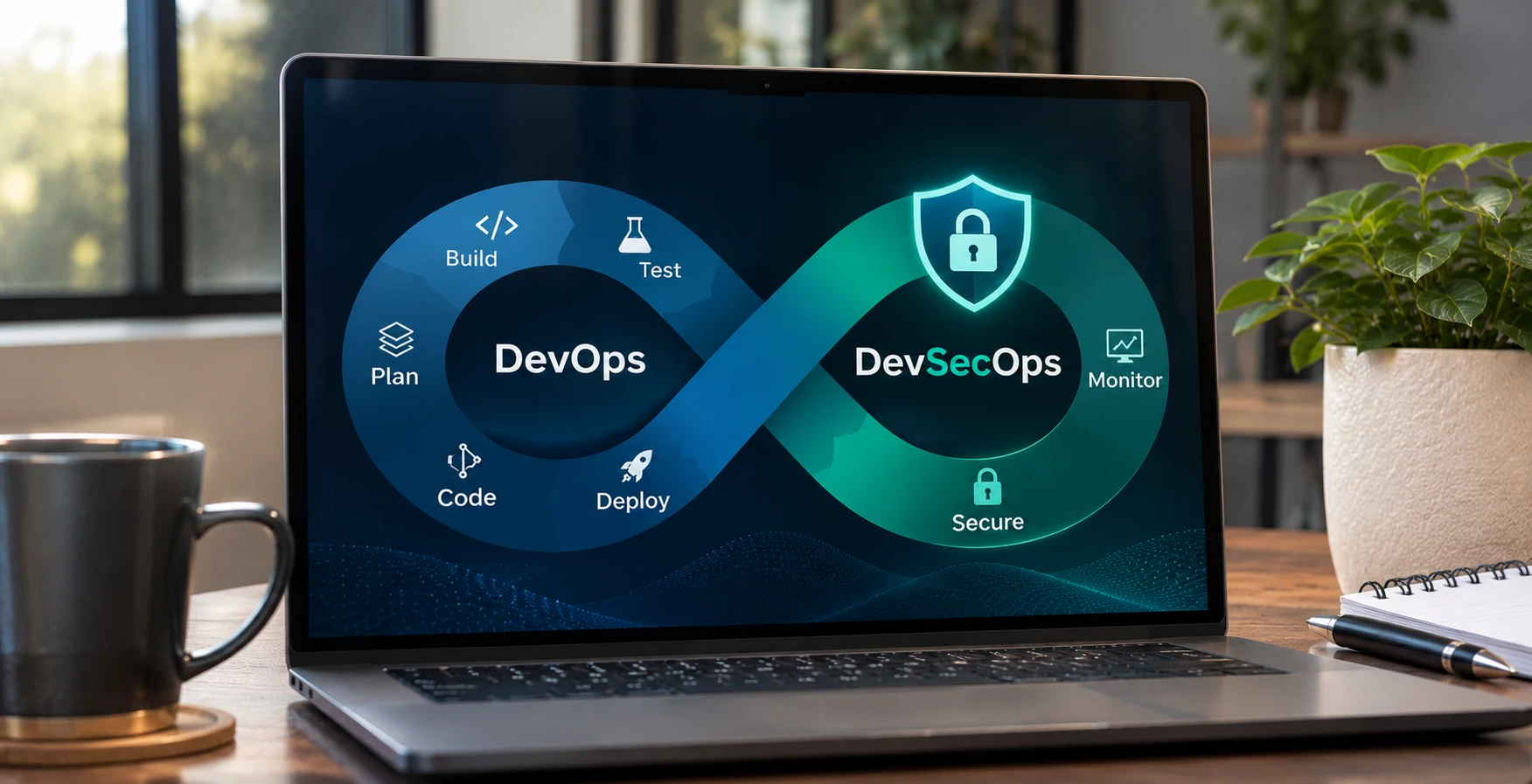
DevOps vs DevSecOps: The Difference, a Comparison Table and When You Need It
November 28, 2026
DevOps vs DevSecOps explained: the clear difference, a side-by-side table, what security adds at each pipeline stage and when regulated data requires it.
How Much Does It Cost to Build an App? Native, Web and Cross-Platform Compared
November 28, 2026
How much does it cost to build an app? Compare native iOS and Android, web and cross-platform, plus backend, design, store fees and upkeep costs.