
AI Chatbot Development Services: What They Include, What They Cost, and How to Choose
AI chatbot development services explained: what a real engagement covers, how to evaluate vendors, what it should cost in 2026, and the mistakes that turn chatbot projects into expensive shelf-ware.
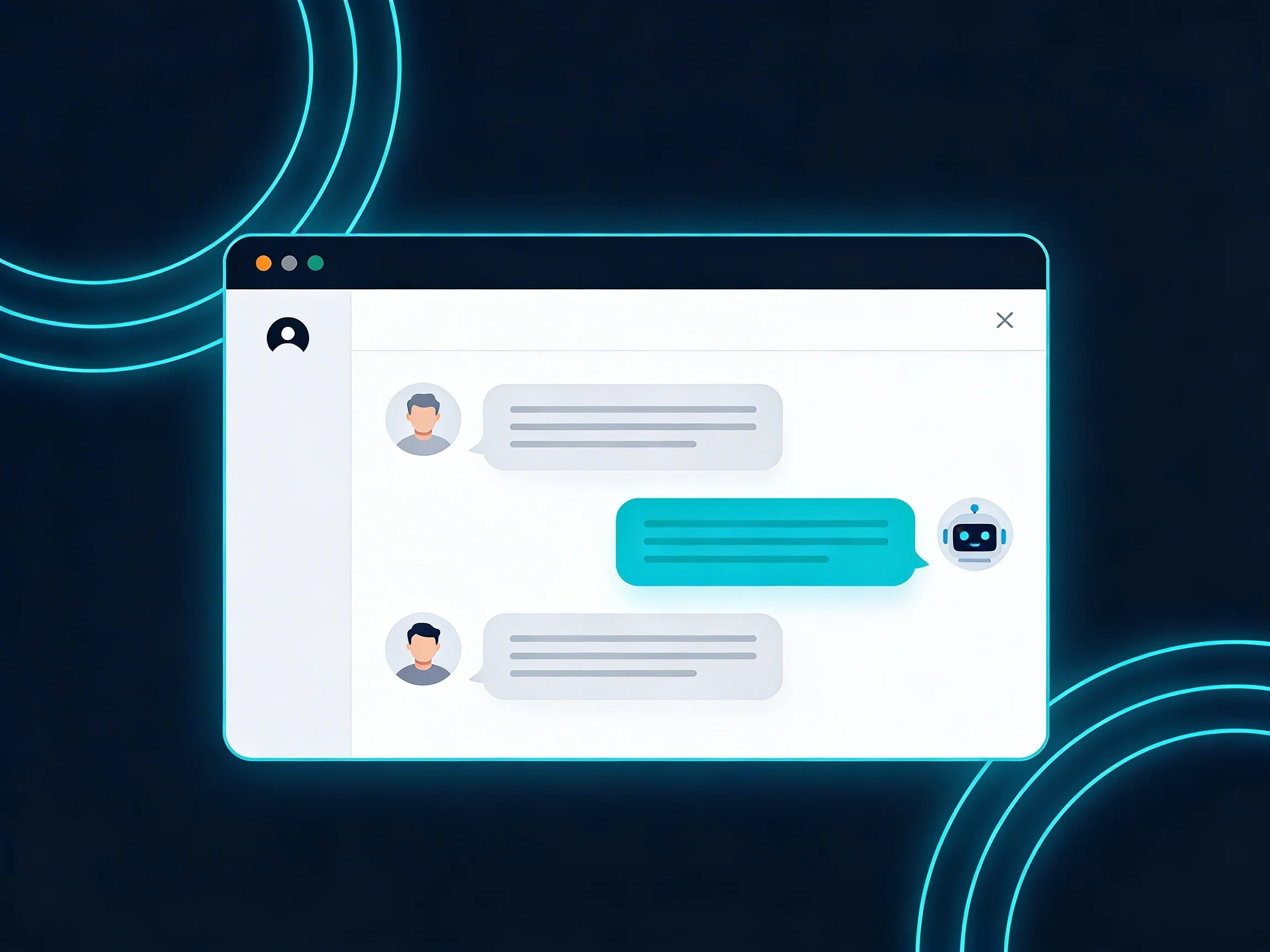
The pitch for AI chatbots is everywhere right now cut support costs, automate conversations, scale without headcount. And honestly, it works. When the build is done right. But AI chatbot development services has become one of those terms that means wildly different things depending on who you're asking. One vendor hands you a no-code bot builder and calls it done. Another scopes a six-month custom build with a team of NLP engineers. Both call what they do "AI chatbot development."
If you're a business owner or product lead evaluating this space for the first time, you need to know what's actually inside the box before you sign anything. This guide covers what a real engagement includes, what it should cost in 2026, and the failure patterns we see over and over again.
What AI chatbot development services actually include
A real AI chatbot development engagement covers five phases. If a vendor is vague about any of these, push on it or walk.
Discovery and strategy
Before any code gets written, the development team should be mapping your business processes, finding which conversations are worth automating, and nailing down success metrics. A customer support bot for a SaaS company has almost nothing in common with an intake bot for a healthcare provider or a lead qualification assistant for a B2B manufacturer.
This phase answers the questions that actually matter: Which conversations happen most frequently? Where are your team members grinding through repetitive tasks that a bot could handle? What systems does it need to talk to your CRM, your help desk, your ERP? What does a win look like in 90 days?
Skip this, and you get a technically functional chatbot that nobody uses because it doesn't solve anything real.
Conversational design
This is where the chatbot's voice, tone, and actual conversation flows get built. Good conversational design accounts for how real humans talk which includes typos, vague half-questions, topic changes mid-conversation, and frustration when things aren't working.
The output is usually a set of conversation maps covering your primary use cases, fallback behaviors when the bot doesn't understand, and escalation paths to a human. For businesses in healthcare or financial services, this phase also defines compliance guardrails what the chatbot is and isn't allowed to say, and how it handles sensitive situations.
Technical development and AI integration
This is the actual build. Modern AI chatbots run on large language models (LLMs) GPT-4, Claude, or open-source alternatives usually combined with retrieval-augmented generation (RAG) to ground responses in your specific company data rather than general knowledge.
The technical work involves picking the right model and framework for the use case, building the retrieval pipeline that connects the chatbot to your knowledge base, developing integrations with existing systems via APIs, implementing authentication and data security controls, and building the front-end interface or embedding the bot into your website or app.
Tech stacks vary by vendor, but you'll commonly see Python or Node.js on the backend, vector databases like Pinecone or Weaviate for semantic search, orchestration layers like LangChain, and cloud infrastructure on AWS, Azure, or GCP.
Testing and quality assurance
AI chatbots fail in predictable ways. They confidently give wrong answers (hallucination). They miss intent on edge-case questions. They break when users go even slightly off-script. Structured QA catches these before your customers experience them.
Testing needs to cover accuracy, intent recognition, edge cases with ambiguous or multi-part questions, integration testing on every API call and CRM update, and load testing to confirm the system holds up under real traffic. A vendor without a defined QA process is shipping you a prototype.
Deployment, monitoring, and iteration
Launch is not the finish line. After deployment, the chatbot needs ongoing monitoring to catch accuracy drift as your product and policies evolve, surface new conversation patterns, and keep improving. Expect dashboards tracking resolution rate, escalation rate, satisfaction signals, and where users are abandoning conversations.
The best AI chatbot development services include a defined iteration cadence typically monthly reviews where the team analyzes performance data, fine-tunes responses, and expands capabilities based on what real users are actually asking.
What separates good vendors from bad ones: Any vendor can demo a polished chatbot with scripted questions. Ask them to build a quick proof of concept using your actual FAQs or product documentation. How the bot handles your specific content tells you far more than any pitch deck.
Types of AI chatbots and when each makes sense
Not every business needs the same thing. The spectrum runs wider than most people expect.
FAQ and knowledge base bots are the simplest tier. They use RAG to pull answers from your existing documentation and handle the most common support use case: deflecting repetitive tickets. If 40% of your inbound requests are variations of the same 20 questions, this is where to start. Build time is typically 2–4 weeks.
Workflow automation bots go further than answering questions they take action. Scheduling appointments, processing returns, updating account information, creating support tickets. These need deeper system integrations and usually take 6–12 weeks to build properly.
AI sales and lead qualification assistants engage website visitors, qualify leads based on your criteria, and route good-fit prospects to your sales team without requiring a form fill. For B2B companies, these can measurably improve conversion rates by catching visitors who would otherwise bounce.
Internal operations bots serve your team rather than your customers handling IT help desk queries, answering HR policy questions, helping sales reps quickly find product specs. These are often overlooked, but they deliver some of the fastest ROI because the user base is smaller and the use cases are tightly defined.
What AI chatbot development costs in 2026
The price range is genuinely wide, and the gap between tiers isn't arbitrary the scope difference between a simple FAQ bot and a fully integrated conversational AI agent is enormous.
| Tier | Scope | Cost Range | Build Time |
|---|---|---|---|
| Basic FAQ / Knowledge Base Bot | Your docs, Q&A, web embed | $5,000–$15,000 | 2–4 weeks |
| Integrated Workflow Bot | CRM/help desk/ERP connections, multi-step workflows | $15,000–$50,000 | 6–12 weeks |
| Custom Conversational AI Agent | Multi-channel, domain-trained, advanced analytics | $50,000–$150,000+ | 3–6 months |
Monthly maintenance and hosting typically adds $500–$5,000 depending on traffic volume and how actively the bot is being optimized.
One number that often surprises people: LLM inference costs. If your chatbot handles high conversation volume, API usage fees for the underlying model can become a meaningful ongoing line item. A good development partner factors this into the total cost of ownership conversation upfront.
Watch for this: Some vendors quote a low build fee and make their margin on monthly maintenance contracts or API markup. Get a full breakdown of build cost, hosting, inference costs, and any ongoing fees before you sign.
How to evaluate an AI chatbot development partner
The market is crowded. Here's what actually separates vendors worth working with from ones that will waste your time and budget.
Ask about their RAG architecture. Can they explain how they handle hallucination prevention? What's their approach to chunking, embedding, and retrieval? How do they handle situations where the knowledge base doesn't contain an answer? If the technical answers are vague or amount to "we use ChatGPT," that's a red flag.
Look for industry-specific experience. A chatbot for a healthcare company has fundamentally different requirements HIPAA compliance, clinical accuracy guardrails, liability considerations than one for an e-commerce business. Ask for case studies in your vertical, not just a general portfolio.
Understand the post-launch model. The vendor's job doesn't end at deployment. Ask specifically: How do you monitor for accuracy drift? What happens when the underlying LLM releases a new version? How do you handle model updates? What's the process for adding new use cases after launch? A partner who doesn't have concrete answers here is selling you a build, not a product.
Evaluate total cost of ownership honestly. Build cost is just the starting point. Factor in hosting, LLM inference fees, ongoing optimization, and what scaling looks like if your traffic doubles. Good partners are transparent about all of this before you start, not six months in.
Test with your actual data. Any vendor can demo a polished chatbot with scripted questions. Ask them to run a proof of concept against your real FAQs, product documentation, or support ticket history. The difference in quality between vendors becomes immediately obvious once they're working with your content.
The mistakes that kill chatbot projects
These show up across industries. Knowing them in advance is most of the battle.
Over-scoping version one. Trying to automate every possible conversation in the first release leads to a bot that does nothing particularly well. Start with your five to ten highest-volume use cases, build those properly, and expand from there. Speed to value matters.
No real escalation path. Users are patient with chatbots for routine, low-stakes questions. They are not patient when they have a complex or emotional issue and can't get to a human. Every chatbot needs a fast, obvious path to a live agent and that agent needs to see the conversation history so the customer doesn't have to repeat themselves.
Treating it as a one-time project. A chatbot that doesn't get updated with new product information, policy changes, and lessons from failed conversations becomes a liability within months. Budget for ongoing maintenance from day one, not as an afterthought.
Starting with bad data. AI chatbots reflect the quality of the content they're built on. If your knowledge base is outdated, contradictory, or full of internal jargon that customers don't use, the chatbot will reproduce all of it. Clean up your documentation before you start building this is often the most valuable work in the whole project.
Choosing a platform when you need a partner. Self-serve chatbot builders work for simple, static FAQ use cases. But if your needs involve custom integrations, domain-specific accuracy requirements, or regulatory compliance, you need a development team that understands your business not a tool with a visual flow builder and a library of templates.
The v1 rule: A focused chatbot that handles five use cases perfectly will outperform a sprawling bot that handles fifty use cases inconsistently. Narrow scope, high accuracy then expand.
Where AI chatbots are heading
The shift happening right now is from reactive Q&A bots toward proactive AI agents that take autonomous action. In 2026, the most capable chatbots don't just answer questions they resolve support tickets end-to-end, process transactions, and orchestrate multi-step workflows across systems without a human in the loop.
Advances in agentic AI frameworks mean chatbots can reason through multi-step problems, call external tools and APIs, and make decisions within defined guardrails. The boundary between "chatbot" and "AI agent" is blurring fast.
For businesses, the practical implication is this: the ROI gap between companies using AI effectively and those relying on form fills and email queues is compounding every quarter. The companies investing in AI chatbot development services now with solid architecture, clean data, and a commitment to iterative improvement are building a structural advantage over competitors that keep waiting for the technology to "mature."
It's already mature enough. The question is whether your implementation is.
Ready to build a chatbot that actually works?
We design and build AI-powered chatbots and conversational agents grounded in your data and integrated with the tools your team already uses. Discovery through deployment no black boxes, no lock-in.
More Articles
SOC 2 Compliance for Startups: Why It Matters and How to Get Started in 2026
April 10, 2026
SOC 2 compliance for startups: understand why SOC 2 is essential for SaaS companies in 2026, the business benefits, a practical step-by-step checklist, cost breakdown, and how to maintain your certification year-round.
Why Your Business Needs Custom Software Design and Development Over Off-the-Shelf Tools
March 26, 2026
Discover why custom software design and development beats off-the-shelf tools. Learn how a custom software application development company can scale your business.
Stop Polluting Your Machine: Why Devcontainers Are the Way Forward
March 26, 2026
How devcontainers eliminate environment drift, keep projects isolated, and make AWS multi-account workflows painless.